
Post
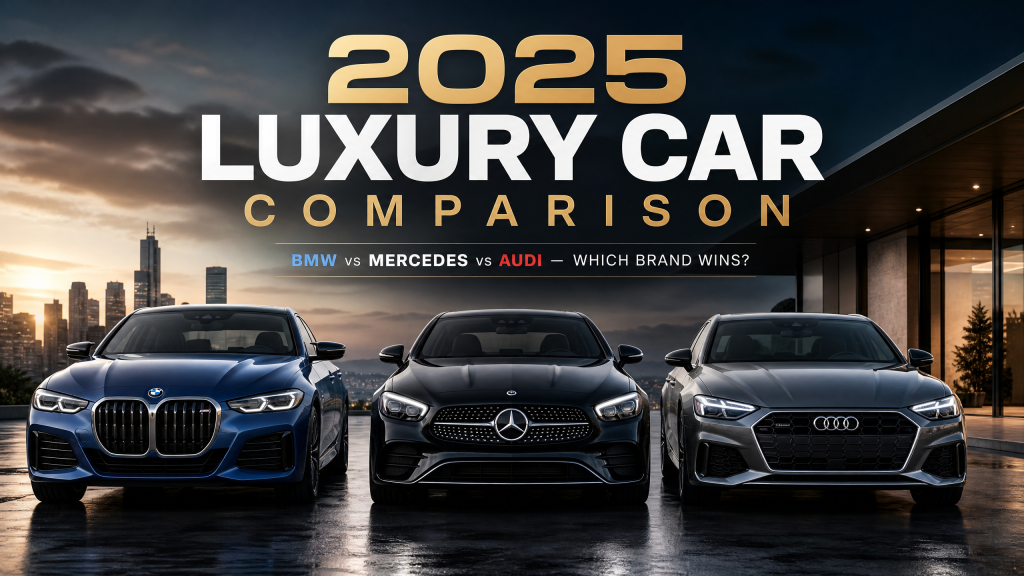
POST 10 – 2025 Luxury Car Comparison: BMW vs Mercedes vs Audi — Which Brand Wins?
Jun
BMW vs Mercedes-Benz vs Audi: Which German Luxury Brand Is Right for You?
For decades, BMW, Mercedes-Benz, and Audi have formed the legendary German luxury automotive triumvirate. These three manufacturers have dominated the premium vehicle market worldwide, earning reputations for engineering excellence, cutting-edge technology, refined craftsmanship, and exceptional performance. While many buyers view them as direct competitors, each brand has cultivated a distinct identity and philosophy that appeals to different types of drivers.
The debate over which German luxury brand is best has existed for generations. Enthusiasts often defend their preferred manufacturer passionately, citing advantages in performance, comfort, technology, or design. However, the reality is that there is no universally superior choice. The best luxury vehicle depends entirely on what you value most in your driving experience. Whether you prioritize dynamic handling, first-class comfort, or advanced technology, one of these brands likely aligns more closely with your expectations.This comprehensive comparison examines the strengths, weaknesses, and unique characteristics of BMW, Mercedes-Benz, and Audi to help you determine which luxury automaker deserves a place in your garage.
BMW: The Ultimate Driving Machine
BMW has built its global reputation around one simple but powerful slogan: “The Ultimate Driving Machine.” Unlike many luxury brands that focus primarily on comfort or prestige, BMW places the driver at the center of the experience. Every major engineering decision is influenced by how it affects handling, responsiveness, and driving enjoyment.
The brand’s commitment to performance can be traced back decades. BMW consistently develops vehicles that feel balanced, precise, and engaging. Even entry-level BMW models often provide a level of driving satisfaction that competitors struggle to match. Rear-wheel-drive architecture remains a cornerstone of many BMW vehicles, contributing to their excellent weight distribution and responsive cornering characteristics.
The BMW 3 Series serves as perhaps the best example of the company’s philosophy. Long regarded as the benchmark sports sedan, the 3 Series combines practicality, luxury, and performance in a way few vehicles can replicate. Steering feedback is direct and communicative, allowing drivers to feel connected to the road beneath them. Acceleration is immediate, braking performance is confidence-inspiring, and the overall driving experience encourages enthusiasm behind the wheel.
BMW’s M Performance and full M division models elevate this formula even further. Vehicles such as the M3, M4, M5, and XM showcase the company’s engineering expertise by delivering extraordinary performance without sacrificing daily usability. These vehicles are equally capable of handling a daily commute or a weekend track session.
BMW Technology and Innovation
BMW has made significant investments in automotive technology, creating one of the industry’s most refined digital ecosystems. The latest generation of iDrive represents a major evolution in infotainment design. Featuring a curved display that seamlessly integrates the digital instrument cluster and central touchscreen, BMW interiors feel modern without becoming overwhelming.
One of the greatest strengths of iDrive is its usability. While some manufacturers prioritize visual appeal at the expense of functionality, BMW manages to achieve both. Menus are logically organized, response times are quick, and voice control capabilities continue to improve with each generation.
The available Head-Up Display remains among the best in the luxury segment, projecting navigation information, speed, and safety alerts directly into the driver’s line of sight. Premium audio systems developed in partnership with Bowers & Wilkins deliver exceptional sound quality that rivals many home audio setups.
BMW’s growing lineup of electric vehicles, including the i4, i5, i7, and iX, demonstrates that the company intends to maintain its performance-oriented identity even in the era of electrification. These models combine instant electric torque with the engaging driving dynamics that have defined BMW for generations.
Mercedes-Benz: The Definition of Luxury and Comfort
If BMW focuses on the driver, Mercedes-Benz focuses on everyone inside the vehicle. For more than a century, Mercedes has represented luxury, prestige, refinement, and innovation. The company’s engineering philosophy prioritizes comfort and effortless travel above all else.
Driving a Mercedes-Benz often feels fundamentally different from driving a BMW. Instead of emphasizing road feedback and aggressive handling, Mercedes creates an environment designed to isolate occupants from external distractions. Noise insulation is exceptional, ride quality is remarkably smooth, and every aspect of the vehicle is engineered to promote relaxation.
The Mercedes E-Class and flagship S-Class exemplify this approach. These vehicles glide over imperfect road surfaces with an almost magical smoothness, particularly when equipped with advanced air suspension systems. Long-distance journeys become significantly less tiring because passengers are shielded from vibrations, noise, and harsh impacts.
Mercedes interiors consistently rank among the most luxurious in the automotive world. High-quality leather, authentic wood trim, precision metal accents, and customizable ambient lighting combine to create a truly premium environment. Sitting inside a modern Mercedes often feels closer to a luxury lounge than a traditional automobile.
For buyers who spend substantial time on highways or frequently transport passengers, Mercedes offers a level of comfort that few competitors can equal. The experience prioritizes serenity, making every journey feel effortless regardless of distance.
Mercedes-Benz Technology Leadership
Mercedes-Benz has long been recognized as an automotive technology pioneer. Many safety features now considered standard throughout the industry first appeared on Mercedes vehicles. The company continues to push boundaries through innovations in driver assistance, connectivity, and user experience.
The MBUX (Mercedes-Benz User Experience) infotainment platform stands among the most advanced systems currently available. Its voice assistant can understand natural speech patterns, allowing users to interact with the vehicle conversationally rather than relying on specific commands.
One of Mercedes’ most impressive innovations is augmented reality navigation. By overlaying directional guidance onto a live camera view of the road ahead, the system helps drivers navigate complex intersections and unfamiliar environments with greater confidence.
Mercedes also leads in semi-autonomous driving technology. Advanced driver assistance systems provide lane-centering, adaptive cruise control, traffic jam assistance, and numerous active safety features that reduce stress during daily driving. These technologies often operate with a level of refinement and smoothness that surpasses many competitors.
Audi: The Technological Sophisticate
Audi occupies a unique position between BMW’s sportiness and Mercedes’ luxury. The brand has built its reputation around intelligent engineering, understated design, and technological sophistication. Audi vehicles rarely seek attention through excessive styling or dramatic marketing claims. Instead, they appeal to buyers who appreciate precision, innovation, and subtle elegance.
Perhaps no feature is more closely associated with Audi than Quattro all-wheel drive. Introduced to the world through motorsport competition, Quattro revolutionized vehicle traction and handling. Decades of continuous development have transformed it into one of the most respected all-wheel-drive systems available.
For drivers living in regions with snow, rain, or challenging weather conditions, Quattro provides a significant advantage. Enhanced traction improves stability, confidence, and overall safety without compromising driving enjoyment.
Audi’s design philosophy emphasizes clean lines, balanced proportions, and timeless aesthetics. While some luxury vehicles quickly reveal their age as design trends evolve, Audi models tend to maintain their visual appeal for many years. This understated elegance attracts buyers who prefer sophistication over flashiness.
Audi’s Interior Excellence and Digital Innovation
Audi interiors are widely regarded as some of the best in the automotive industry. Materials are carefully selected, assembly quality is exceptional, and every control feels precisely engineered. The overall atmosphere combines luxury with modern minimalism.
One of Audi’s most influential innovations is the Virtual Cockpit. This fully digital instrument cluster replaces traditional gauges with a configurable high-resolution display capable of presenting navigation maps, performance information, media controls, and vehicle data directly in front of the driver.
Audi has consistently embraced advanced lighting technology, connectivity features, and digital interfaces. The company often introduces innovative technologies that later become standard throughout the industry. From matrix LED headlights to sophisticated driver assistance systems, Audi remains at the forefront of automotive development.
The brand’s growing electric vehicle lineup, particularly the e-tron family, further demonstrates its commitment to future mobility. Audi combines its traditional strengths in design and technology with modern electric powertrains to create vehicles that feel both advanced and familiar.
Reliability, Ownership Costs, and Resale Value
When comparing BMW, Mercedes-Benz, and Audi, prospective buyers should also consider long-term ownership factors. All three brands offer premium engineering, but premium engineering often comes with premium maintenance costs.
Modern German luxury vehicles contain sophisticated electronics, advanced powertrains, and complex safety systems. Maintenance and repairs typically cost more than equivalent mainstream vehicles. However, following manufacturer maintenance schedules can significantly improve long-term reliability.
Resale values vary by model and market conditions. Historically, BMW performance models and Mercedes flagship vehicles often maintain strong residual values, while Audi benefits from broad appeal in regions where all-wheel-drive capability is highly valued.
Extended warranties, certified pre-owned programs, and comprehensive service packages can help reduce ownership concerns for buyers considering any of these brands.
Final Verdict: Which One Should You Choose?
Choosing between BMW, Mercedes-Benz, and Audi ultimately depends on your personal priorities and driving preferences.
Choose BMW if you enjoy driving, appreciate responsive handling, and want a vehicle that feels connected and engaging every time you get behind the wheel. BMW remains the benchmark for drivers who value performance and dynamic capability.
Choose Mercedes-Benz if comfort, luxury, and advanced driver assistance technology are your highest priorities. Mercedes excels at transforming everyday travel into a relaxing and refined experience.
Choose Audi if you appreciate understated design, cutting-edge technology, exceptional interior quality, and the confidence provided by Quattro all-wheel drive. Audi offers a balanced blend of luxury, innovation, and practicality.
The good news is that there is no objectively wrong choice among these three iconic brands. Each represents decades of engineering excellence and continues to set standards for the global luxury automotive market. The right decision is simply the one that best aligns with your lifestyle, preferences, and expectations.
Whether you choose BMW’s driving excitement, Mercedes-Benz’s luxurious comfort, or Audi’s technological sophistication, you will be joining a tradition of automotive excellence that has shaped the premium vehicle segment for generations.
