
Post
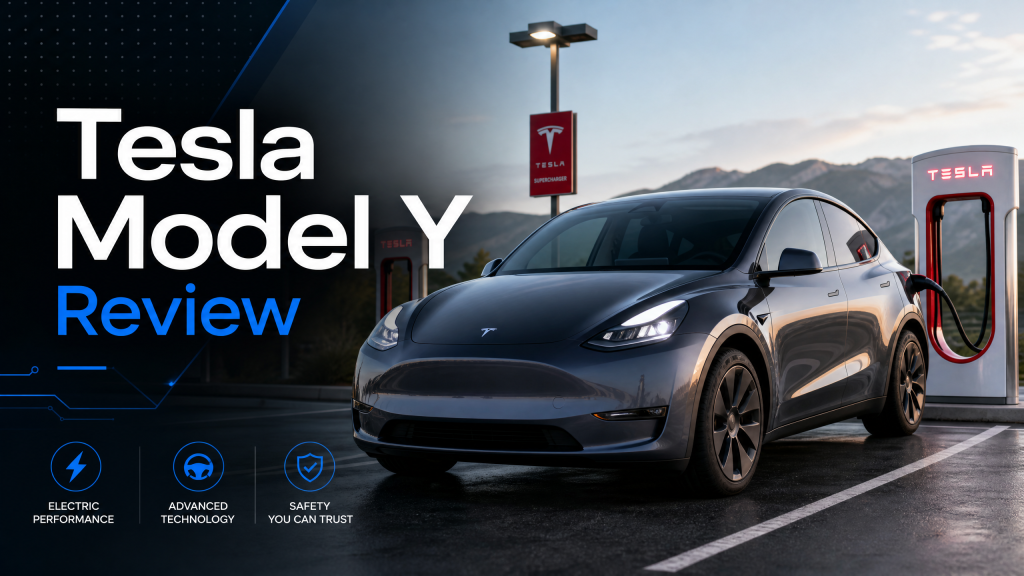
2024 Tesla Model Y Review: Is It Still the Best Electric SUV?
Jun
2024 Tesla Model Y Review: Is It Still the Best Electric SUV?
The Tesla Model Y has been the world’s best-selling vehicle for two consecutive years, a remarkable achievement that speaks to both the growing mainstream acceptance of electric vehicles and the Model Y’s compelling combination of range, technology, performance, and practicality. But the competitive landscape has changed dramatically since the Model Y launched, with established automakers now offering compelling electric SUV alternatives. After significant updates including Highland redesign changes in some markets, does the Model Y still deserve its position at the top of the EV SUV rankings?
Range and Charging: Tesla’s Enduring Advantage
The 2024 Model Y Long Range AWD offers 330 miles of EPA-rated range — still among the best in the compact SUV class and comfortably ahead of most direct competitors. More importantly, Tesla’s Supercharger network, now numbering over 17,000 stations in North America, provides a charging infrastructure experience that remains meaningfully better than the combined alternatives. The Supercharger network’s reliability, speed (up to 250 kW on V3 Superchargers), automatic payment, and navigation integration create a road trip experience that’s genuinely stress-free in ways that competitive charging networks still struggle to match consistently.
The Model Y’s ability to pre-condition the battery when navigating to a Supercharger means the battery arrives at optimal temperature for maximum charging speed, a feature that reduces charging time and improves charging consistency in cold weather. This pre-conditioning capability, combined with route planning that automatically includes charging stops with real-time availability data, makes long-distance travel in a Model Y more seamless than in virtually any competitor.
Performance Across the Lineup
The Model Y is available in three configurations that deliver very different performance profiles. The Standard Range RWD model offers the best efficiency and an adequate 279-mile range with 0 to 60 mph acceleration of approximately 6.6 seconds — perfectly adequate for most family needs. The Long Range AWD adds the second motor for improved winter traction, extended range, and 4.8-second 0 to 60 acceleration. The Performance model, available with the Track Pack option, can sprint from 0 to 60 mph in 3.5 seconds, genuinely supercar-quick for an SUV that comfortably seats five adults and their luggage.
The instant torque delivery characteristic of electric motors makes every acceleration scenario feel effortless and confident. The low center of gravity afforded by the floor-mounted battery pack gives the Model Y handling characteristics that defy its SUV classification, with body roll well controlled and steering that provides adequate feedback for engaged driving.
Interior Technology and User Experience
The Model Y’s minimalist interior, dominated by a 15.4-inch central touchscreen, remains one of the most distinctive cabin environments in any vehicle. The approach of moving nearly all vehicle controls to the touchscreen — including climate settings, mirror adjustments, steering wheel position, and regenerative braking behavior — continues to divide opinion. Enthusiasts appreciate the uncluttered aesthetic and seamless software integration; critics note that finding commonly adjusted settings while driving requires too much visual and cognitive attention.
Tesla’s over-the-air update capability means the Model Y genuinely improves over time through software enhancements. Features that weren’t available at purchase regularly appear through free updates, including improvements to the Autopilot and Full Self-Driving systems, new entertainment options, efficiency improvements, and quality-of-life refinements. No competing manufacturer has matched Tesla’s pace and comprehensiveness of software development for existing vehicles in service.
Autopilot and Full Self-Driving Technology
Autopilot, included with every Tesla, provides Traffic-Aware Cruise Control and Autosteer on highways — a competent system that handles highway driving with minimal driver intervention. Full Self-Driving (FSD), an additional subscription or purchase option, expands the system’s capabilities to include automatic lane changes, freeway on and off-ramps, city street navigation, and traffic light and stop sign response. The system has improved dramatically through regular software updates and is now capable enough for many city driving scenarios with appropriate driver attention.
Important caveats remain: FSD is classified as a driver assistance system requiring active driver supervision, not a fully autonomous system. High-profile incidents involving Tesla’s driver assistance systems have raised legitimate safety questions, and regulatory scrutiny has intensified. Tesla’s eventual vision of truly autonomous operation remains years away, and the premium pricing for the current FSD subscription may be difficult to justify purely on current capability.
Build Quality and Ownership Experience
Tesla’s build quality has improved significantly from early Model Y production, though it still lags behind traditional luxury manufacturers in panel gap consistency and interior material quality. Panel gap variations that would be unacceptable at comparable price points from BMW or Mercedes-Benz appear occasionally on Model Y examples, and interior materials are functional rather than luxurious. Tesla’s service network, while expanding, continues to receive more mixed customer satisfaction ratings than the company’s product quality merits.
The Competitive Reality
The 2024 competitive landscape includes the Hyundai Ioniq 5 and Kia EV6, both of which offer 800-volt charging architecture that achieves faster maximum charging rates, along with genuinely premium interior quality at comparable pricing. The Volkswagen ID.4, Ford Mustang Mach-E, and Chevrolet Equinox EV offer competitive range with better established service networks and, in some cases, more intuitive human-machine interfaces. The BMW iX3 and Mercedes EQC bring traditional luxury brand interior quality.
Despite stronger competition than it has ever faced, the Model Y retains its top position primarily through the strength of the Supercharger network, the longest-range options in the class, Tesla’s software development capabilities, and genuinely competitive pricing relative to comparable range and capability. For buyers who prioritize charging infrastructure and maximum range, the Model Y remains the best overall choice. For those who prioritize interior quality, charging architecture, or brand prestige, compelling alternatives now exist that merit serious consideration.
Entertainment and Family Features
Modern minivans have evolved into genuinely sophisticated family entertainment platforms, recognizing that rear passenger experience matters as much as driver experience for family vehicle satisfaction. The Sienna, Odyssey, and Pacifica all offer available dual rear entertainment screens with HDMI inputs that connect modern gaming consoles and streaming devices. Rear USB charging ports, often four or more, ensure that every passenger’s device stays charged on long trips. Retractable window sunshades in the rear side windows reduce solar heat gain and glare for rear passengers, appreciably improving comfort during summer road trips.
Sound isolation in modern minivans has improved dramatically, with acoustic glass and additional sound deadening material reducing highway noise to levels comparable to premium sedans. This improvement in acoustic comfort transforms long-distance travel, reducing fatigue for both driver and passengers over extended journeys. For families who spend significant time driving to school activities, sports events, and vacations, this interior environment quality substantially affects the quality of family life over the years of ownership.
